One of the hardest lessons I’ve learned is that not everyone deserves the same level of access to your time, energy, attention, and expertise.
For years, I treated everyone the same.
I answered the calls.
Returned the messages.
Took the meetings.
Offered the advice.
Solved the problems.
I genuinely wanted to help.
What I eventually discovered was that some people weren’t looking for help.
They were looking for access.
There’s a difference.
When I look at where energy gets wasted, it usually falls into four categories.
1. Free Advice Seekers
These are the people who ask for guidance repeatedly but never implement it.
They schedule meetings.
Send messages.
Ask questions.
Request introductions.
Want your perspective.
Then they do absolutely nothing with it.
The problem isn’t that they need help.
The problem is that they consume energy without creating movement.
At some point, you have to recognize the difference between someone seeking transformation and someone collecting information.
2. Low-Commitment Clients
These are the people who want elite outcomes without elite commitment.
They want championship results.
They want executive performance.
They want high-level coaching.
But they don’t want to invest the time, effort, accountability, or resources required to get there.
They want coaching prices from Walmart and outcomes from Navy SEAL training.
It doesn’t work that way.
Results follow commitment.
Always have. Always will.
3. Chronic Victims
Life hits all of us.
Everyone gets knocked down.
Everyone faces setbacks.
Victims aren’t defined by what happened to them.
They’re defined by their refusal to move beyond it.
These are the people who want sympathy instead of accountability.
Every solution has a reason it won’t work.
Every opportunity has a reason it won’t help.
Every challenge becomes another chapter in the same story.
You can’t coach someone who is more committed to the problem than the solution.
4. Projects That Don’t Scale
Anything that requires you to personally push every button every day eventually becomes a burden.
If your presence is required for every decision, every action, and every outcome, you’ve built a job, not a system.
High performers often fall into this trap because they’re capable.
They can carry more.
Solve more.
Handle more.
The problem is that capability often disguises unsustainability.
The Operator Difference
What’s interesting is that the best operators tend to behave very differently.
They:
- Execute
- Take ownership
- Value performance
- Value accountability
- Seek feedback
- Adapt quickly
- Solve problems
- Carry responsibility
Operators don’t wait for rescue.
They move.
They assess reality and take action.
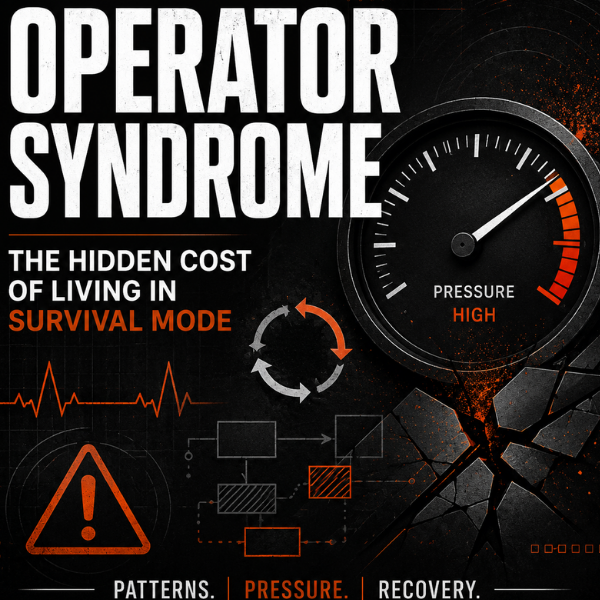
That’s one reason the Operator Syndrome conversation interests me so much.
The very traits that create extraordinary performance can eventually create extraordinary strain.
Responsibility becomes over-responsibility.
Ownership becomes isolation.
Accountability becomes self-pressure.
Execution becomes exhaustion.
The answer isn’t abandoning those traits.
The answer is becoming selective with where you invest them.
Because premium energy is a finite resource.
And one of the highest forms of leadership is learning where not to spend it.
Not every problem is yours to solve.
Not every person is ready to change.
Not every opportunity deserves your attention.
Protect the source.
Spend your energy where there is movement, ownership, and life.
Everything else is noise.